 Anadolu Geziyor
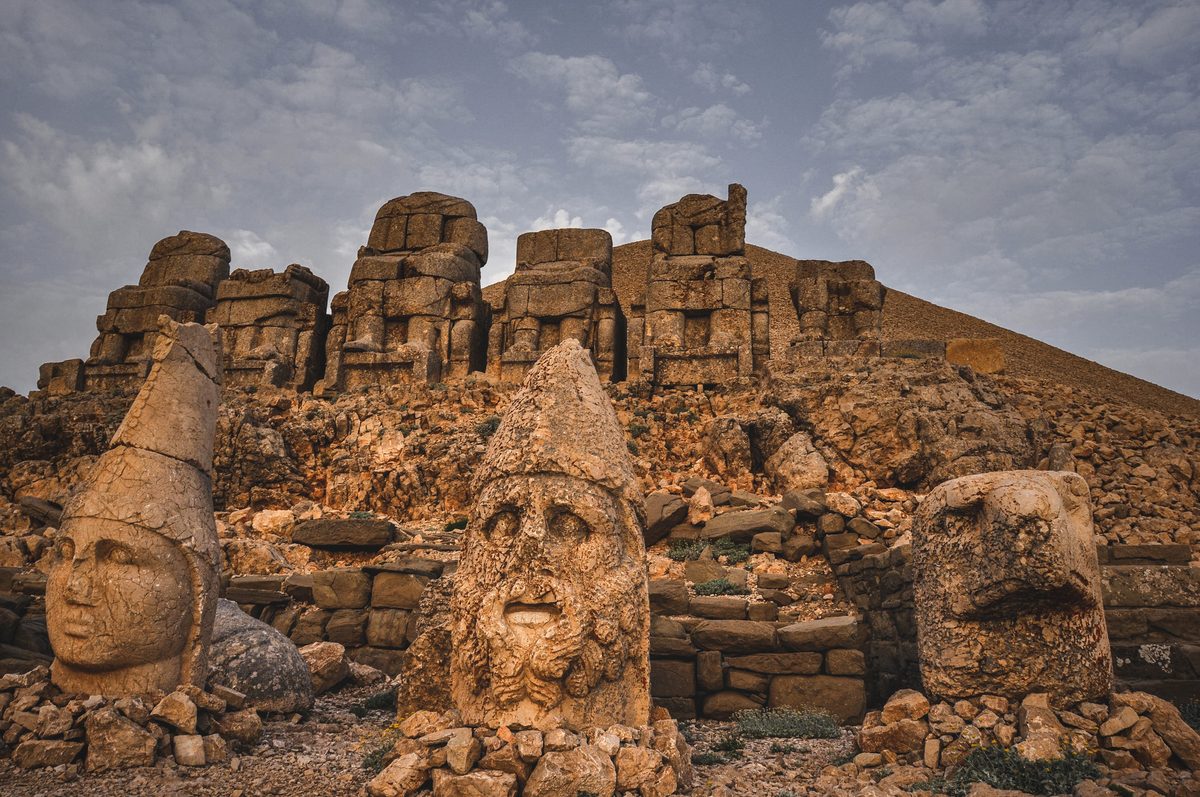
Reading Nemrut through Commagene
The giant stone heads on the summit of Mount Nemrut are impressive on their own, but the route makes much more sense when it is read together with Arsameia, the Cendere Bridge and Karakuş. Together they show the landscape of the Kingdom of Commagene.
The summit sanctuary
The monumental sanctuary of King Antiochus I is known for the colossal heads, reliefs and inscriptions on its east and west terraces and for the artificial stone tumulus between them. Sunrise and sunset both offer dramatic light; the choice depends on the tour's route and road safety.
Arsameia, Cendere and Karakuş
Arsameia's reliefs and inscriptions explain the political and religious language of Commagene's rulers. The Cendere Bridge was built over the Cendere stream by the Roman XVI Legion in the reign of Emperor Septimius Severus. The Karakuş tumulus, associated with the royal women of Commagene, still has standing columns with reliefs.
Practical tips
Large coaches cannot always reach the summit, so a local vehicle may be used; check whether this transfer is included. From the car park there are steps and a sloping path to the terraces. Even in summer it can be cold and windy at the top, so bring a warm layer, especially for sunrise.
Nemrut is far from the other GAP highlights, so including it in a programme adds long road sections. When comparing tours, check whether Nemrut is actually included, at what time the summit is reached and where you stay overnight.
Frequently asked questions
Sunrise or sunset at Nemrut?
Both are memorable. Sunrise means a very early start and cold temperatures; sunset is easier logistically. The tour's route usually decides.
Is the summit walk difficult?
It is a short but uphill walk with steps. Travellers with limited mobility should ask the team in advance.